How did you learn you were facing a breast cancer diagnosis? What was going through your mind when you heard the news?
Three years ago in March, 2022, I developed a rash on my left breast when I was breastfeeding my 3 month old son. I am a dermatologist, so fortunately I am trained to diagnose rashes. I knew that it was either mastitis (an infection of the breast) or inflammatory breast cancer. We have 4 children and I breast fed the older three, so I knew something was different and wrong. I listened to my body and am grateful for a healthcare team that listened to me. We know our bodies and our medical history best, and we need to advocate for ourselves.
When I saw the enlarged lymph nodes on my ultrasound, I knew it was inflammatory breast cancer. Being a healthcare provider with knowledge can be a blessing and a burden. In my medical training, I learned about all the possible debilitating side effects of cancer treatments and was taught that inflammatory breast cancer meant death. I was convinced that I was dying. I was overwhelmed and couldn’t imagine how I was going to survive and take care of my family. I was petrified that I wouldn’t see my son’s first birthday. I felt lost and hopeless until I found guidance, inspiration and faith to be able to muster the courage, focus, and energy to figure out a direction for my healing.
I quickly had to shift my mindset and learn new information in order to believe that it is possible to survive inflammatory breast cancer. I found that with earlier diagnosis, greater awareness, multidisciplinary centers, and new treatments that survival rates are improving. Leaning into integrative lifestyle interventions and holistic healing gave me hope, control, helped me feel better, and made me an active participant in my healing during my treatments and beyond. I decided that I was going to give this fight my all so I made significant changes to my nutrition, movement, mindfulness, faith, and relationships. I discovered that our bodies are more resilient and stronger than I ever imagined, our bodies have an incredible innate ability to heal, and that the world is filled with amazing people who want to help if you let them.
What makes inflammatory breast cancer unique?
Inflammatory breast cancer is breast cancer that has spread through the lymphatic channels into the skin. It may present with a rash, swelling of the arm, and there may or may not be a lump present. Since it has already invaded the lymphatics, all inflammatory breast cancer is stage III or IV at diagnosis. It can grow in weeks to months and is often misdiagnosed as mastitis, an infection common during breastfeeding. Inflammatory breast cancer is rare (1-5% of all breast cancers), on average occurs at a younger age, and is more aggressive (grows in weeks to months) with a poor prognosis (accounts for 10% of breast cancer deaths and carries a 40%, 5 year survival).
What was your treatment regimen like?
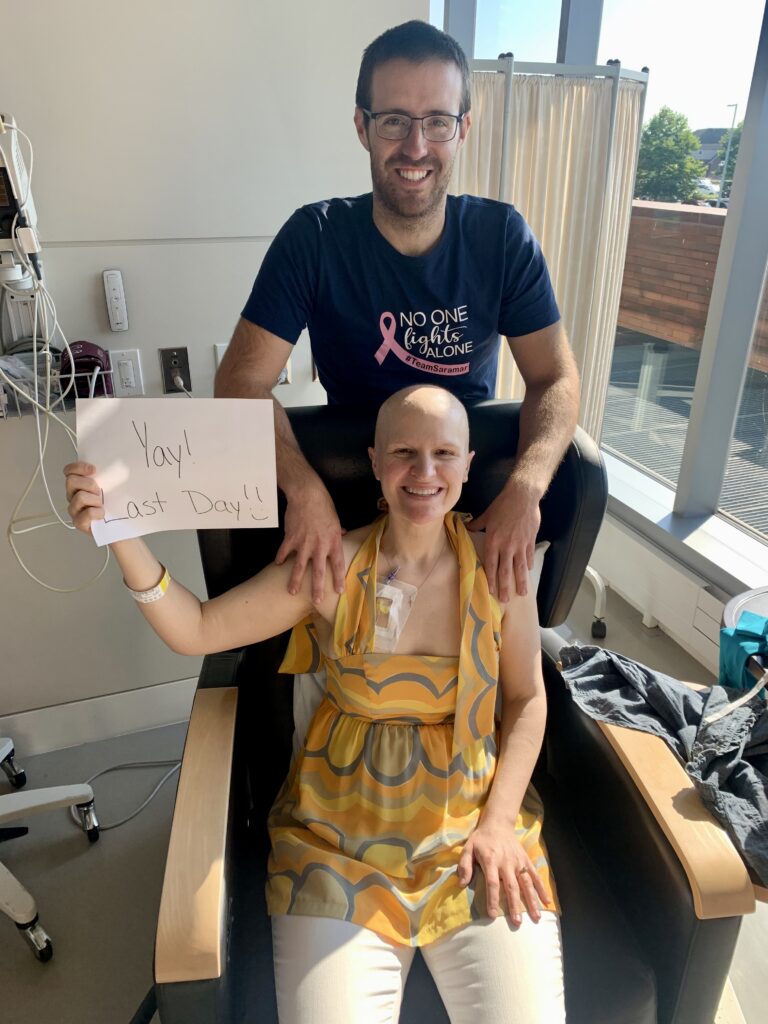
Because inflammatory breast cancer is more aggressive, trimodal therapy (chemotherapy, surgery, and radiation) is recommended. I was treated with dose dense Adriamycin-Cyclophosphamide Taxol (ACT) chemotherapy (also known as neoadjuvant chemotherapy), a non-skin sparing modified radical mastectomy with axillary lymph node dissection and lymphovenous shunt (a microsurgical procedure that has been shown to help prevent swelling of the arm known as lymphedema in at-risk patients), 36 rounds of radiation, an oophorectomy with salpingectomy and hysterectomy (since my tumor was estrogen positive and I carry the BRCA1 mutation). I was treated for a year with a BRCA1 targeted mutation medication (Olaparib) that kills mutated cancer cells and two years of a targeted medication (cyclin dependent kinase inhibitor, Abemaciclib) that prevents cancer cell growth.
You shared that you carry the BRCA1 mutation. Why do you feel genetic testing is so important?
I wanted to know about my genetic mutation status to have the best treatment for my breast cancer, proactively prevent additional cancers, and protect my children and family so they can lead healthy, full lives. Because I am BRCA1 positive, I was able to take a medication for a year that targets the BRCA1 mutation and kills cancer cells. It is incredible that the medical field has come so far that a tiny pill can target my gene mutation! This gives me hope for tailored treatment cures for all, and that in the future no one will suffer and die from breast cancer.
I have one known second degree relative that died from breast cancer at a young age decades before I was even born. No one else in my family had breast cancer or an associated cancer, so I didn’t meet screening criteria for genetic testing prior to my diagnosis. Now I know that I didn’t have to “meet criteria” for genetic testing. There are companies online that you can go through privately (or with insurance) to obtain a genetic screening panel for mutation carrier status of common cancer genes. I have always felt personally and as a physician that knowledge is half the battle and that prevention, if possible, can save a lot of headaches and heartache. If you’re at all worried about familial cancer risk, most insurance companies cover genetic counseling if you’re eligible, or you can get tested through companies online.
Can you share some “bright spots” or stories of what got you through this difficult time in your life?
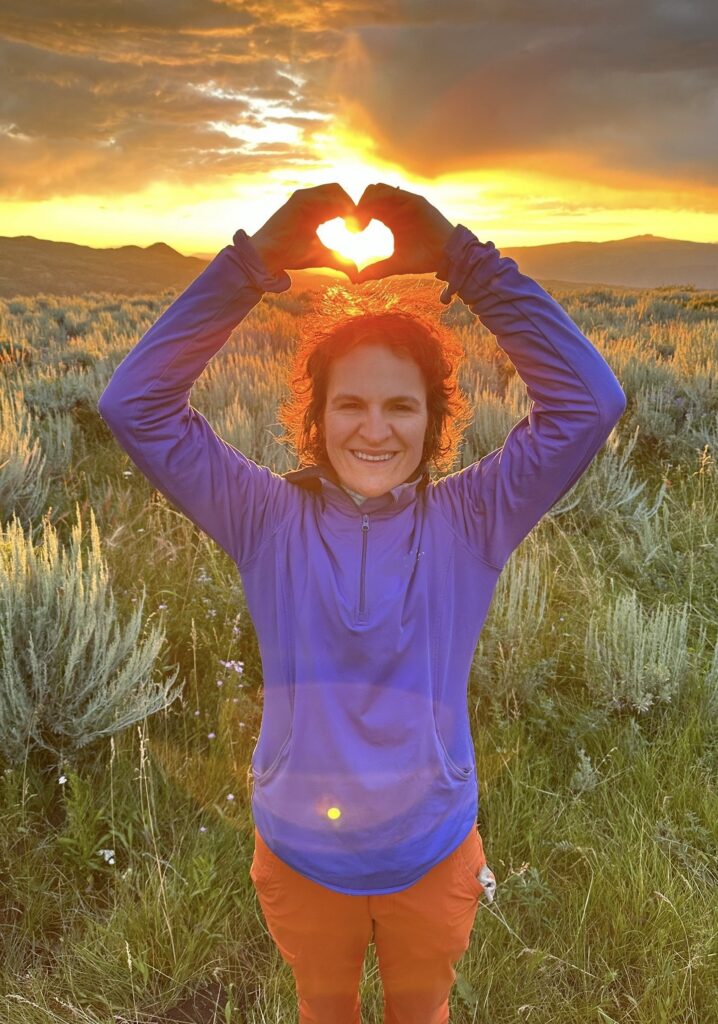
The brightest spot in my journey was everyone who supported me and my family after diagnosis. We shared the news of my diagnosis to so many people; family, friends, teachers, church community, colleagues, and my patients and we were awed and humbled by the response. The amount of folks who offered help was incredible. When I asked God who would take care of our children, the answer was clear as our entire community pitched in and fed our children, held our baby, drove our kids to activities, sent messages and gifts of encouragement, holiday gifts for the children, prayed for my healing and peace, and walked with us during this incredibly challenging time. I tear up every time I think of these blessings from our community!
The other “bright spot” has been participating in two adult cancer survivor retreats. These transformative experiences allowed me to safely test my body at new skills (sledding face first, white water rafting, and surfing!), trust myself again, and make new friends that understood what it was like to be a cancer survivor. I was able to share big emotions, fears, losses, and laughs with other survivors who knew exactly where I’d been. I never expected that cancer would bring incredible new friends into my life.
What was the hardest thing about your breast cancer journey?
Emotionally and mentally the hardest thing is not knowing how the treatment will go, how my story will unfold. Chemotherapy and surgery and radiation are a grueling gauntlet to go through, and the experience is magnified by the gravity of not knowing if the treatment would get rid of the cancer and how long the cancer will be kept at bay. But cancer patients aren’t unique in these existential questions, but it’s definitely hastened and amplified. Someone told me, “it is being written” and that you just take a leap of faith that you’re choosing the right path with the knowledge you have and that God will take care of the rest. Often it was a faith over fear situation. I still struggle with uncertainty, fear, and “scan-xiety”, but there are silver linings as my cancer diagnosis reminds me to live this day fully. The present is a gift and I strive to stay as present as I can to the daily miracles.
Physically, radiation was surprisingly the biggest challenge. The daily grind and cumulative effect of chemotherapy and surgery before radiation caught up to me. Due to the aggressive nature of inflammatory breast cancer, the breaks between the three therapies is shorter than for other types of breast cancers, so there is less time for the body to recover. I developed shingles on the back of my head during radiation which was initially terrifying because of concern for recurrence and then was just incredibly painful. Despite the pain, I was probably the happiest shingles patient ever, because it sure beat the alternative!
The PA Breast Cancer Coalition’s mission is to find a cure for breast cancer now… so our daughters don’t have to. What does that mission mean to you?
A cure means that our children and descendants will look at us as the last and the first generation. The last generation to get carefully cut and precisely poisoned and burned to the brink. The first generation to discover how to prevent the blooming of mutated cells into cancer cells and the first to discover how to swiftly, directly target and easily remove cancer cells so they never take over another precious life. Let us be the ones that end cancer as a death sentence and burden for all so we can give the gift of a cancer free life for generations to come.
If you could give one piece of advice to a woman who is newly diagnosed, what would you say?
I am sorry that your strength is being tested in this way. Take it one breath, one step, one day at a time, and keep going. We are here with you, and you are not alone.